Real Talk: Stitching the I Will Never Understand BLM Quote
As a designer who has spent more hours than I care to count staring at digitized paths and testing tension on scrap fabric, I approach every new machine embroidery design with a mix of curiosity and skepticism. We have all been there: you find a graphic that looks sharp on a screen, only to watch it turn into a puckered mess once the needle hits the hoop. Today, I am putting the I Will Never Understand BLM Quote under the microscope. This is not just about whether the file opens correctly; it is about whether this specific piece of Graphics content holds up in the real world of Crafts, client expectations, and durable handmade goods.
First Impressions and Visual Personality
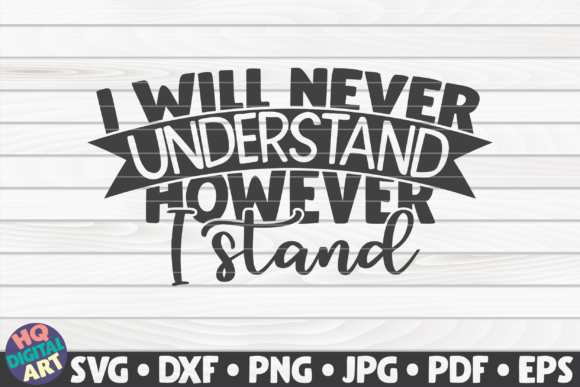
When I first loaded the I Will Never Understand BLM Quote into my viewer, the immediate takeaway was its boldness. Text-based designs are tricky. They walk a fine line between being legible and becoming a dense block of thread that ruins the drape of a garment. The mood here is assertive. It is not a subtle, whisper-quiet motif; it is a statement piece. For an embroidery project, this means the design demands attention. It does not belong on a delicate silk scarf or a sheer curtain. It belongs on sturdy cotton, heavy canvas, or thick fleece.
The layout appears straightforward, which is often a blessing in disguise for embroidery. Complex scripts can lead to thread breaks and excessive jump stitches. A cleaner, bolder font style typically translates better to stitch, allowing for consistent satin or fill stitches without requiring microscopic precision from the operator. However, the phrase itself carries weight. As a reviewer, I look at how the visual personality aligns with the message. This design feels suited for items meant to spark conversation or express strong personal identity, rather than passive decoration.
The Real-World Test: From Screen to Sweatshirt
To truly evaluate this embroidery file, I imagined a specific scenario: a custom order for a local boutique owner who wants to expand their line of statement apparel. She asked for a design that could work on a unisex heavyweight sweatshirt. This is where the I Will Never Understand BLM Quote faces its first practical hurdle. Sweatshirts are thick, but they are also stretchy. If the stitch density is too high, the fabric will pucker around the text, creating an unsightly ripple effect that screams "amateur hour."
In this context, the included SVG and DXF files become crucial. While these are often used for cutting machines, having them allows me to visualize the exact boundaries of the design before I even touch the embroidery software. I can check the proportions against standard hoop sizes. For a sweatshirt chest placement, a 4x4 or 5x7 hoop is standard. If the quote is too long, it might require a 6x10 hoop, which limits the types of garments it can fit comfortably. My advice? Always map the dimensions against your most common hoop sizes before committing to a bulk order of blanks.
Fabric Compatibility and Stitch Behavior
Let us talk about texture. The success of any text-based applique design or standard stitch-out depends heavily on the fabric texture. On a smooth, tight-weave cotton tote bag, the I Will Never Understand BLM Quote would likely shine. The contrast between the thread and the fabric would be sharp, and the satin stitch edges (assuming the digitizer used them for the letter borders) would lay flat and crisp. This makes it an excellent candidate for a tote bag design intended for daily use.
However, move this same design to a textured waffle-knit thermal or a loose-weave linen, and you run into risks. Small details can get lost in the weave. If the lettering has thin serifs or intricate connections, they may disappear or look jagged. This is why I always recommend testing the design on scrap fabric first. Do not skip this step. Check how the fill stitch behaves on darker fabrics. Sometimes, a light-colored thread on dark fabric requires an underlay stitch to prevent the background from showing through, which adds bulk. If the digitization does not account for this, the final product will look washed out and unprofessional.
Commercial Viability for Etsy Sellers and Makers
For the Etsy seller or small shop owner, the question is not just "does it stitch?" but "will it sell?" and "is it safe to sell?" The I Will Never Understand BLM Quote falls into the category of political or social commentary. This is a double-edged sword. On one hand, statement pieces have a dedicated audience. On the other hand, they can polarize customers. From a branding perspective, you need to decide if this aligns with your shop’s voice. If your brand is known for neutral, minimalist nursery decor, this design might feel out of place. If your brand is activist-oriented or focuses on bold, modern streetwear, it fits perfectly.
Furthermore, consider the commercial embroidery license. The product description lists various file formats: DXF, PDF, SVG, PNG, JPG, and EPS. It is vital to confirm the licensing terms before selling finished items. Some creators allow unlimited sales of physical products, while others restrict digital resale or require attribution. Never assume. Check the documentation included in the archive. Selling a personalized gift or a batch of custom apparel without proper rights can lead to takedowns or legal issues that no amount of profit is worth.
Technical Notes for the Professional Embroiderer
If you are planning to run this design on a multi-needle machine or a single-needle home unit, keep these technical considerations in mind:
- Stabilizer Selection: Because this is likely a text-heavy design, stabilization is key. Use a cut-away stabilizer for knit fabrics like sweatshirts to prevent stretching over time. For woven fabrics like tote bags, a tear-away might suffice, but test it first to ensure the letters do not pull the fabric.
- Thread Color Contrast: The impact of this quote relies on readability. High contrast is essential. Black thread on white fabric, or white on black, works best. Avoid low-contrast combinations like gray on beige, which will make the text hard to read from a distance.
- Hoop Size and Placement: Ensure the design fits within your hoop without needing to re-hoop. Re-hooping introduces alignment errors. If the design is large, consider splitting it or using a larger hoop if your machine supports it.
- Density Check: Open the file in your editing software. Look at the stitch count relative to the size. If the density seems excessively high for the area, reduce it slightly to prevent fabric distortion, especially on thinner materials.
Final Verdict on the I Will Never Understand BLM Quote
The I Will Never Understand BLM Quote is a functional, bold asset for the right project. It is not a delicate, decorative flourish; it is a tool for expression. For makers creating embroidered patches, heavy canvas totes, or streetwear-style hoodies, it offers a clear, impactful visual. The inclusion of multiple file formats like SVG and EPS adds versatility, allowing you to use the design for hybrid projects—perhaps embroidering part of it and printing another, or using the vector files for matching vinyl decals.
However, it requires a skilled hand. It demands respect for fabric choice, stabilizer selection, and thread tension. It is not a "load and go" design for beginners working on difficult fabrics. But for the experienced craft business owner who understands their materials and their audience, this digital embroidery file can be a powerful addition to their library. Just remember: test on scraps, verify your license, and let the quality of your stitching speak as loudly as the words themselves.