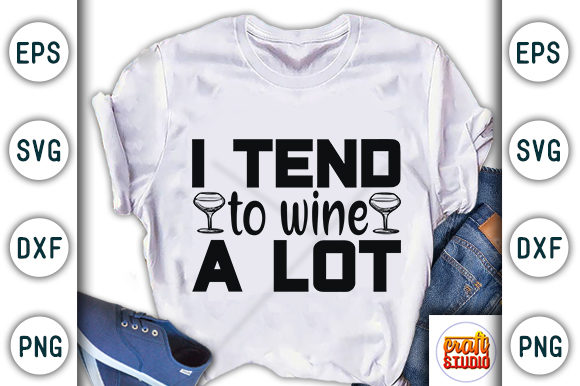
Review: Wine Quote, I Tend to Wine a Lot Design
As a designer who spends more time staring at stitch simulations than I care to admit, I have learned that not all digital assets are created equal. Some files look fantastic on a screen but fall apart under the needle. Others are robust, versatile, and ready for commercial use right out of the folder. Recently, I pulled Wine Quote, I Tend to Wine a Lot from my library to evaluate its potential for a upcoming batch of custom orders. This isn’t just another cute phrase; it is a test case for how well a design translates from a digital embroidery file to a tangible, high-quality finished product.
First Impressions and Visual Personality
The first thing that strikes me about Wine Quote, I Tend to Wine a Lot is its playful yet clean aesthetic. It captures a specific mood—relaxed, humorous, and slightly self-deprecating—that resonates deeply with adult audiences. In the world of Crafts and Graphics, humor sells, but only if the typography supports the joke. This design balances whimsical lettering with enough structural integrity to remain legible after stitching.
The layout feels intentional. It does not rely on overly complex decorative elements that might distract from the message. Instead, it lets the quote do the heavy lifting. For an embroidery project, this simplicity is a strength. It means fewer thread breaks, faster run times, and a cleaner look on the final garment. The visual personality suggests a casual vibe, making it ideal for leisurewear, kitchen textiles, or social accessories rather than formal attire.
Real-World Application: The Tote Bag Test
To truly understand the value of this asset, I imagined a real-life scenario: a custom order for a local boutique specializing in hostess gifts. The client wanted a set of canvas tote bags for wine lovers. I selected Wine Quote, I Tend to Wine a Lot as the primary tote bag design. Why? Because canvas provides a stable, textured surface that holds embroidery well, and the humor of the quote aligns perfectly with the product’s function.
In this context, the design performs admirably. The spacing between letters allows the fabric texture to show through slightly, preventing the embroidery from looking like a solid plastic patch. When stitched with a contrasting thread colors scheme—say, deep burgundy on natural canvas—the text pops without overwhelming the bag. It transforms a simple utility item into a conversation starter, increasing the perceived value of the handmade product.
Versatility Across Product Lines
Beyond tote bags, this design has legs. I can easily see it working as sweatshirt embroidery on a cozy, oversized crewneck. The relaxed nature of the quote matches the comfort of fleece or cotton blends. For custom apparel, placing this on the left chest area creates a subtle, stylish accent. Alternatively, scaling it up for the back of a jacket could make a bold statement for craft fair displays.
It also fits well in the realm of home goods. Imagine this stitched onto a linen apron or a set of kitchen tea towels. The association with wine makes it a natural fit for culinary contexts. For holiday embroidery projects, such as Christmas gifts for friends, this design offers a personal touch that feels thoughtful rather than generic. It serves as an excellent personalized gift option because it speaks to a common hobby without being overly intimate.
Technical Considerations for Embroiderers
While the design is visually appealing, practical execution requires attention to detail. Since the source files include EPS, SVG, PNG, and DXF formats, this package is versatile for both cutting machines and embroidery software. However, as an embroiderer, I must convert these vector or raster images into machine-readable stitches. This step is critical.
Stitch Density and Fabric Choice
One must be cautious with stitch density. If the design is digitized with too many fills, it can pucker lightweight fabrics. For baby embroidery or thin cottons, I recommend using a lighter fill or converting parts of the text to a satin stitch or running stitch outline to reduce bulk. On textured fabrics like towels or denim, a higher density might be necessary to ensure the threads sit on top of the pile rather than sinking in.
Hoop Size and Placement
Before starting, confirm your hoop size. While the quote is relatively compact, ensuring it fits within a standard 4x4 or 5x7 hoop without excessive re-hooping is essential for efficiency. For curved surfaces like caps, the design’s width must be considered to avoid distortion. An embroidered patch might be a safer bet for hats if the direct stitching proves too challenging on the curved brim.
Stabilizer Selection
No matter the fabric, proper stabilization is non-negotiable. For stretchy materials like t-shirts, a cut-away stabilizer ensures the design retains its shape after washing. For woven fabrics like aprons, a tear-away might suffice, but I always prefer testing on scrap fabric first. This prevents ruining client garments and helps gauge how the fabric texture interacts with the thread.
Commercial Viability and Brand Consistency
For Etsy sellers and small shop product creators, consistency is key. Wine Quote, I Tend to Wine a Lot offers a consistent visual language that can be part of a larger collection. If you sell other wine-themed items, this design reinforces your brand identity. It signals to customers that you understand their lifestyle and humor.
When creating printable mockup images for online listings, this design shines. Its clear lines and balanced composition photograph well, allowing potential buyers to visualize the final product. High-quality previews drive engagement and trust. However, always check the licensing terms provided with the design assets. While the file formats suggest broad usability for scrapbooking and vinyl decals, commercial embroidery rights should be explicitly confirmed before selling finished items.
Final Verdict for Designers
In conclusion, Wine Quote, I Tend to Wine a Lot is a strong contender for any designer’s toolkit. It bridges the gap between fun and professional, offering a design that is easy to stitch yet impactful in appearance. Whether you are creating a commercial embroidery run for a local winery or crafting a one-off personalized gift for a friend, this graphic holds up under scrutiny.
Remember to test your digitizing settings, choose your stabilizer wisely, and consider the end-use of the product. With careful execution, this design can elevate your craft business offerings and delight your customers. It is a reminder that in embroidery, as in wine, the details matter most.