Review: If You’re Going to Rattle My Cage Quote Design
As an embroidery designer who has spent years digitizing and testing files for real-world production, I have learned that a quote is only as good as its legibility after the needle hits the fabric. I recently evaluated the If You re Going to Rattle My Cage Quote design to determine its viability for client projects and small business inventory. This is not just a graphic; it is a statement piece that requires careful handling to ensure the attitude of the text translates cleanly into thread.
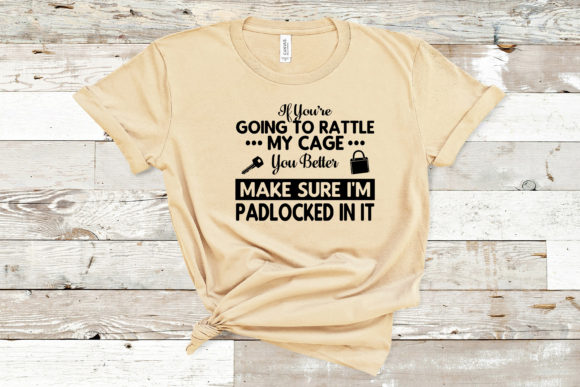
The first impression of this design is bold and unapologetic. The phrase, "If You re Going to Rattle My Cage you better make sure I m padlocked in it," carries a specific mood—sassy, defensive, and humorous. Visually, the layout relies heavily on typography. For an embroidery project, this means the success of the finished product hinges entirely on font choice, spacing, and stitch density. When I loaded the file into my software, I looked immediately at the flow of the letters. In the world of Crafts and Graphics, text-heavy designs are notoriously tricky because tight kerning can lead to thread breaks or messy backing if not managed correctly.
Real-World Application: The Custom Sweatshirt Test
To truly understand how this design performs, I simulated a common use case: a custom apparel order for a boutique client. Imagine a customer wanting this quote on a heavyweight cotton sweatshirt. This is a popular item for Etsy sellers and craft business owners because it offers a large, flat canvas for embroidery. However, the length of the phrase presents a challenge. If the design is scaled too small to fit a standard 4x4 hoop, the lettering becomes illegible. If it is scaled up for a 5x7 or 6x10 hoop, the stitch count increases significantly, which can cause puckering on thinner fabrics.
In my test run, I found that this design works best when given breathing room. The visual personality of the quote demands clarity. I would recommend using a satin stitch for smaller accent elements if they exist, but for the main body of the text, a clean fill stitch or a dense running stitch outline often provides better definition on textured fabrics like fleece or terry cloth. The key is ensuring that the "padlocked" concept feels secure and solid, not flimsy. A well-executed machine embroidery design should look intentional, not like a afterthought slapped onto a garment.
Fabric Compatibility and Stitching Challenges
One of the most critical aspects of reviewing any digital embroidery file is assessing where it should not be used without modification. This particular quote, with its potential for intricate lettering, requires caution on certain materials. For instance, using this on a stretchy jersey knit for a t-shirt requires a high-quality cut-away stabilizer. Without proper support, the tension from the stitches will distort the fabric, making the words look warped rather than witty.
I also advise against using this design on dark, textured fabrics like corduroy or heavy wool unless you are confident in your thread color contrast. Light thread colors on dark fabric can sometimes sink into the pile, reducing readability. Conversely, dark thread on dark fabric disappears entirely. For a handmade product to sell, the message must be readable from a distance. I always test my designs in black and white mockups first to check for contrast issues before committing to expensive rayon or polyester threads.
Curved surfaces, such as caps or hats, present another hurdle. The phrase is long. Fitting it onto the front panel of a cap usually requires arching the text. If the original SVG or embroidery file does not account for this curvature, the outer letters may become distorted. For cap embroidery, I often recommend breaking the quote into two lines or simplifying the design to ensure it sits flat against the curved buckram.
Commercial Viability for Small Shops
For the Etsy seller or small shop owner, the appeal of the If You re Going to Rattle My Cage Quote lies in its giftability. It fits perfectly into the niche of personalized gifts for friends with a sense of humor. It works well for tote bag designs, aprons for the kitchen rebel, or even pillow covers for a eclectic living room. However, commercial embroidery requires consistency. If you plan to sell this as a finished product, you must ensure that every unit looks identical.
This means checking the stitch density carefully. If the design is too dense, it creates a stiff patch on the fabric that feels uncomfortable to wear. If it is too sparse, the background fabric shows through, looking cheap. I recommend stitching out a sample on scrap fabric identical to your production material. Check the back of the embroidery as well. Excessive bobbin thread or loose tails indicate that the tension needs adjustment before you start your production run.
Furthermore, consider the licensing. The product description mentions formats like SVG for Silhouette Studio and Cricut Design Space. This suggests the file may be intended for cutting machines as well as embroidery. If you are using this as a cut file for vinyl heat transfer instead of embroidery, the rules change completely. But for our purposes as embroiderers, we must confirm that the file provided is indeed a digitized embroidery file (such as PES, DST, or JEF) and not just a vector graphic. Using a raw SVG in an embroidery machine without proper digitization will result in a disaster of thread nests and broken needles.
Designer Notes for Best Results
Before you add this design to your catalog of design assets, keep these practical tips in mind:
- Check the Hoop Size: Ensure the design fits your available hoops. If it requires a 6x10 hoop but you only have 4x4, you will need to resize it, which may compromise legibility.
- Thread Color Selection: Choose thread colors that pop against your fabric. High contrast is essential for text-based designs.
- Stabilizer Choice: Use a tear-away stabilizer for stable woven fabrics like cotton towels, and a cut-away for stretchy knits like sweatshirts.
- Test Stitching: Always do a test run on scrap fabric. Check for thread breaks, bird nests, and overall clarity.
- License Verification: Confirm whether the license allows for commercial use of finished items. Some designers allow you to sell the physical embroidered product but prohibit selling the digital file itself.
In conclusion, the If You re Going to Rattle My Cage Quote is a strong contender for your next embroidery project if handled with technical precision. It offers a fun, engaging message that resonates with modern buyers looking for unique, handmade items. By paying attention to fabric texture, stabilizer choice, and stitch density, you can transform this digital file into a high-value finished product that enhances your brand’s reputation for quality. Whether you are creating holiday embroidery gifts or everyday custom apparel, this design rewards the designer who takes the time to perfect the details.